2024年2月25日 星期日

week 2. cultural probes


https://interactions.acm.org/archive/view/march-april-2019/probetools

https://probetools.net/


References:
Gaver: Design: Cultural Probes, 1999
Wallace: How Design Probes Work, 2013

more detail examples in

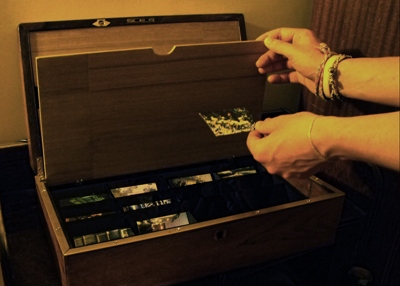
Probe Tools (Task Cam)

Making design probes work

Designing for an other Home: Expanding and Speculating on Different Forms of Domestic Life (DIS 18) (Diversifying the Domestic: A Design Inquiry into Collective and Mobile Living, DIS19)


Critical viewpoint:
 Probology: 
(1) identity probes
(2) urban probes
(3) domestic probes
(4) value probes
(5) empathy probes
(6) mobile probes
(7) digital cultural probes
(8) cognitive probes
(9) technology probes

Questions:
How do Cultural Probes use Tangibility and Embodied skills to investigate and interpret the situated contexts?
How do 6 propositions in Technology as Experience guide the Cultural Probes?

Exercise 1: (deadline 3/11)
1. Choose 1 embodied interaction design case (in CHI, TEI, DIS)
2. Redesign the possible cultural probes for this case (according to Gaver's original ideas and Embodied skills) 
3. Explain with at least 200 words  

2024年2月17日 星期六

week 1. Technology as Experience

Course grading:

1. 200 words report every 1-2 week on assigned paper (40%)
2. 2-3 Sketches (or Medium articles) (20%)
3. 1 Final Conceptual Design Project  (40%)

Course Intro
Part I. Methods
Part II. Phenomenology
Part II. Paradigms

----------------------------------------------------------------------------------------------------------------------
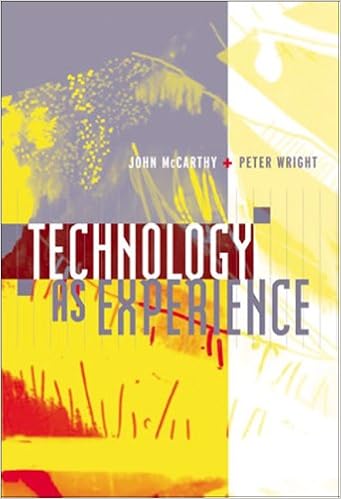
John McCarthy and Peter Wright. 2004. Technology as experience. Interactions 11, 5 (September 2004), 42-43. DOI: https://doi.org/10.1145/1015530.1015549


https://www.amazon.com/Technology-as-Experience-MIT-Press/dp/0262633558/

Featured:
Chapter 1 Living with Technology:
The User as a Cog in a Virtual Machine (During the 1970s and the 1980s the dominant approach to understanding relationships between people and technology assumed a single user sitting in front of a computer screen and keyboard performing a fairly well prescribed
task.)
The User as a Social Actor (During the late 1980s and the 1990s the opportunistic or contingent aspects of everyday activity became the central focus of challenges to the dominance
of information-processing psychology.)
Consumers and the User Experience (The 1990s saw the development of the dotcom companies and a multimillion-dollar games industry; strong penetration of computers into the
home; the confluence of computer and communications technologies; and the beginnings of wireless, mobile, and ubiquitous computing.)
Toward a Deeper Understanding of Technology as Experience: 6 propositions

從"技術即經驗"談起


摘錄此書提出的六大主張如後。

主張一:
我們的第一個主張是,為了公平對待技術在我們生活中所造成的種種廣泛的影響,我們應該從親身感受的生命,以及行動與互動的親身感受或情感的品質兩方面,嘗試去詮釋人與技術的關係。
Our first proposition is that, in order to do justice to the wide range of influences that technology has in our lives, we should try to interpret the relationship between people and technology in terms of the felt life and the felt or emotional quality of action and interaction. (p. 12)

主張二:
我們的第二個主張是,互動技術在工作、居家、教育和休閒中的社會實踐描述,並不足以說明經驗描述中的"親身感受的生命"
Our second proposition is that social-practice accounts of interactive technologies at work, at home, in education, and in leisure understate the felt life in their accounts of experiences. (p. 14)

主張三:
我們的第三個主張是,用技術來描述親身感受的經驗,是困難的。
Our third proposition is that it is difficult to develop an account of felt experience with technology. (p. 15)

主張四:
我們的第四個主張是,就經驗而言,經驗的實用主義哲學特別的清晰,它們所包含的行動和意義創造的模式,說明了行動與互動中,某些關於親身感受的生命及情感的、感官的特質。 
Our fourth proposition is that pragmatist philosophy of experience is particularly clarifying with respect to experience, and that the models of action and meaning making they encompass express something of felt life and the emotional and sensual character of action and interaction. (p. 17)

主張五:
我們的第五個主張是,實用主義所重視的情感的、自發的、創意的經驗面向,更強調了從理解技術的親身生活經驗中所創造的美學。 
Our fifth proposition is that the importance given to the emotional-volitional and creative aspects of experience in pragmatism prioritizes the aesthetic in understanding our lived experience of technology. (p. 18)
主張六:
我們的第六個主張也是最後一個主張, 建立實用主義的修訂理論,特別有益於理解技術與設計。 
Our sixth and final proposition is that the revisionary theorizing of pragmatism is particularly valuable for understanding technology and design. (p. 19) 
Feature Chapter 3 A Pragmatist Approach to Technology as Experience:
Background to Pragmatism and Experience
John Dewey(1859–1952)
Enriching Activity through Aesthetic Experience
Dialogicality
Bakhtin

Ref:

2022年5月22日 星期日

week 15. designerly knowledge & solutionism

1. final project discussion

2.

What is design knowledge?

以設計而言,  我們必須提 Nigel Cross 在 2007 年的  “Designerly Ways of Knowing" 這本書. 在英文版第 18 頁, 他比較三大學門間的差異:

所研究的現象:

科學: 自然世界 (the nature world)

人文: 人類經驗 (human experience)

設計: 人造世界 (artificial world)

採用的方法:

科學: 控制的實驗, 分類, 分析 (controlled experiment, classification, analysis)

人文: 類比, 譬喻, 評估 (analogy, metaphor, evaluation)

設計: 建模, 式樣構成, 合成 (modelling, pattern-formation, synthesis)

價值:

科學: 客觀, 理性, 中立, 真理 (objectivity, rationality, neutrality, truth)

人文: 主觀, 想像, 承諾, 正義(subjectivity, imagination, commitment, justice)

設計: 實用性, 獨創性,移情, 適當性 (practicality, ingenuity, empathy, appropriateness)

綜合 Cross 的研究, 他主張將設計學視為一個學科 (discipline), 而不僅是科學或人文, 1999 年一篇在 Design Issues 上的文章清楚討論了 Design Science, Scientific Design, Science of Design 以及 design as science 的種種不適當性, 並強調設計應該揚棄科學的癟腳的認識論, 自己走出一條路來.

另外對於設計是不是等於解決問題, Cross 也有不同的看法,  可以參考他的書.

最後我個人對於"設計就是解決問題" 是無法同意的, 我的底限在於 “設計可以解決問題", 而且 ”X 可以解決問題" 基本上可以將X 換成 Science, humanities,…, 任何你想得到的名詞.

“設計就是解決問題" 基本上將設計視為服務於以下命題的萬能工具組:"我們的生活世界是一個問題重重的功能世界“, 這違背我的信仰, 因此, 對我個人無法成立.

我相信的是維科 (Vico)所言的, 世界是一個不斷開展的奧秘世界, 而其中意義永遠處於湧現的狀態 (emerging).


solutionism HCI 參考文獻:

1.  The Solution Printer: Magic Realist Design Fiction

2.  Solutionism, the Game: Design Fictions for Positive Aging

3.  Anti-Solutionist Strategies: Seriously Silly Design Fiction


Final Project: (Deadline 5/30)

1. select an embodied design artifact
2. outline 3 different approaches of 3 paradigms for this artifact
3. conduct "micro" research with the above 3 approaches
4. Format: ACM Extended Abstract at least 6 pages 

2022年5月14日 星期六

week 14. framing design in the third paradigm

Framing Design in the Third Paradigm

Salu Ylirisku, Virtu Halttunen, Johanna Nuojua, and Antti Juustila, ACM CHI 2009

1. p. 1131.
ABSTRACT:

"...the new design paradigm, which considers
designing as a situated and constructive activity of meaning
making rather than as problem solving."


...how design projects proceed from the fuzzy early phases
towards the issues of central relevance to designing.


A central concept is framing,...Several aspects of framing
are explicated, exploratory, anticipatory and social framing,
and related concepts of ‘focusing’, ‘priming’, and
grounding’ are explained.

2.
INTRODUCTION


A new paradigm is emerging within HCI. Harrison et al.
[14] identified three waves of paradigms within HCI, the
first being “Human Factors/Engineering”, the second
“Cognitive Revolution”, and the third “Situated
Perspectives”.


Innovation projects are those that aim at creating novel
products, systems, or services. The central dilemma in such
projects is the question “what to build”....While the first two paradigms
focused predominantly on the optimization of the
performance of man-machine systems based on identified
problems, the third paradigm promotes a view towards the
situated and emergent properties of interaction [14].


Already in the 1970s Rittel and Webber [27] problematized
the idea of the design problem. They contended that design
problems are “wicked” by nature and that every attempt to
solve a design problem frames the problem anew [27].


Due to the open-endedness and the explorative character of
innovation design, it is possible that a design problem does
not exist at the outset of a project.


Instead of design problems, the third paradigm promotes
meaning making to the center of focus [14].

Understanding designing as a constructive activity of meaning making
renders the terminology of problems and solutions obsolete (過時的).

p. 1132


The early phases of innovation therefore cannot be
grounded in the idea of design problems nor tied to the
traditional ideals of optimization, but new theoretical
understanding of the design process in the third paradigm is
required.


3. SITUATED FRAMING

‘framing’...This paper builds on Schön and Rein’s
[31] use of the term to refer to a process of perceiving and
making sense of social reality. These authors contend that
there is no way of perceiving and making sense of this
reality except through a frame [31]. Blumer [3] described
the issue within sociology: the “empirical world necessarily
exists always in the form of human pictures and
conceptions of it.”

"...Harrison et al. [14], who
acknowledge that the artifact and its context are mutually
defining within the third paradigm of HCI."


People create different framing
depending on their “disciplinary backgrounds,
organizational roles, interests, political and economic
perspectives” [30].

跨領域 framing 的問題:
Collaborative designing hence features great varieties of structurally interwoven, overlapping and
transitional frames in effect simultaneously.

Framing 的角色:

This complexity is perplexing when approached at once.
However, constructive frame-mediated interpretation
provides a path through the complexity. As underlying
“structures of belief, perception, and appreciation” [31]
frames help to narrow down the number of available
features by selecting “for attention a few salient features
and relations from what would otherwise be an
overwhelmingly complex reality.”


The dilemma of relevance


In this
paper ‘relevant’ refers simply to an idea that survives until
the end of the process, i.e. is not abandoned.


...improvised acting as described by Keith 
Johnstone [17]. He illustrates improvisation as walking
backwards into the future: The walker may not know what
lies behind (in the direction he is actually heading) but
knows the path from which he came [17].


Schön [30] described the dilemma as the “paradox 
of learning.” He wrote that “a student cannot at first
understand what he needs to learn, can learn it only by
educating himself, and can educate himself only by
beginning to do what he does not yet understand.” [30]
Designers must therefore act upfront, and relevance
becomes apparent afterwards.


According to Schön [29] designers develop framing through
experimentation, or what he calls ‘design moves’: “what if I
did this?” Schön wrote: “When [design] moves function in
an exploratory way, the designer allows the situation to
talk back’ to him, causing him to see things in a new way.”


TWO CASE STUDIES: Designing ideas for wellbeing at work, Design a town vision

 ...


DISCUSSION

p. 1137

Exploratory Framing:


This exploratory framing (formed mainly by ICTs and the Situated Make
Tools method) functioned as scaffolding that supported
collaborative experimentation, ideation and exploration
with the materials available in the design situations.
...

In short,
exploratory framing functioned as a platform for divergent 
thinking, which was grounded in empirical reality.


Anticipatory Framing:


The  anticipatory framing, which was grounded in these themes and primed
by the visits to the physical environment helped designers
to focus their effort on the relevant issues.


The process with anticipatory framing appeared
very efficient, as the teachers could successfully restructure
the entire urban planning project in a matter of a half-hour
session (Situation 2.4).


The framing also helped to design the Persona descriptions, in which the
design of the final concepts was grounded.

Social Framing:


Social framing thus refers to the conceptual
designing of co-design events for the co-designers.


One aspect of social framing is the role assigned to the codesigners. They may be framed as experts, who have the  capacity to judge, design, and guide the direction of a project.

p. 1138

Focusing 


Focusing refers to the iterative process of developing a
comprehensive conception of a design object.
...

When these structures, which
guide perception and appreciation, become available,
designers gain the ability to tell whether something is
relevant or not. This ‘sense of relevance’ is apparent in how
designers expressed their feelings about the value of the
photographs in the Kuntis case.


This ability
is precisely what the evolving frames provide designers
with. At the same time as frames structure perception and
sense making, they constitute what Schön and Rein [31]
call the “normative leapfrom fact to values, from “is” to 
“ought.”  This leap is fundamental in designing, when
designing is understood in the spirit of the definition by
Simon [32] as the activity to transform existing situations 
into preferred ones.

The “normative leap” happens once
designers develop the sense of relevance.


(設計中的 normative leap 發生在 the sense of relevance 清楚之後

Priming


The concept of priming draws attention to the timely
development of framing.


For example, the exploration,
ideation, and evaluation primed the reframing (Situation
2.4) of the whole project in the Kuntis case. Similarly the
whole set of consecutive design events and workshops
primed the conceptual restructuring of the mobile tool
concepts (Situation 1.8) in the Konkari project.


Sleeswijk-Visser et al. [33] called ‘sensitization’ the
increased readiness of the participants to express projectrelevant comments when they spend a period of time with a
sensitization package. Priming sensitizes, and more
precisely, develops initial and vague structures on which
sub-sequent design-cognitions can be grounded.

Grounding 


Grounding ultimately refers to the connection of designing
to the structures in empirical reality in which the designs
will eventually be placed. For example, the Personas in the
Konkari project were grounded in the knowledge about the
workers.

Priming 與 Grounding 的比較:

While priming promotes the timely
relation between events, grounding draws attention to the
hierarchical nesting of framing.

Grounding thus ties closely
to thinking while priming associates more with action.


Framing Artifacts (設計過程中, 用來幫助 framing 的人造物)


The ideas, forms, artifacts, which are
needed to (re)construct a framing, sustain from one
situation to another. This phenomenon is evident in the
studied projects and is facilitated by physical artifacts, and
both case studies reveal the role that the material artifacts
played in the reproduction of a certain frame at a later stage.
....

Artifacts were also utilized to frame memories for the
service of design.
...

Zimmerman et al. [41] claim “design artifacts are the 
currency of design communication.Framing artifacts have
a similar value. Framing artifacts also feature a mnemonic 
function in the reconstruction of framing as the above
examples illustrate.


2022年5月8日 星期日

week 13. threes paradigms of HCI

The Three Paradigms of HCI

1. p. 10

Paradigms compared:

Metaphor of interaction:

  • P1: Interaction as man-machine coupling
  • P2: Interaction as information communication
  • P3: Interaction as phenomenologically situated

Central goal for interaction:
  • P1: Optimizing fit between man and machine
  • P2: Optimizing accuracy and efficiency of information transfer
  • P3: Support for situated action in the world

Typical questions of interest:

  • P1: How can we fix specific problems that arise in interaction?
  • P2: (1) What mismatches come up in communication between computers and people? (2) How can we accurately model what people do? (3) How can we improve the efficiency of computer use?
  • P3: (1) What existing situated activities in the world should we support? (2) How do users appropriate technologies, and how can we support those appropriations? (3) How can we support interaction without constraining it too strongly by what a computer can do or understand? (4) What are the politics and values at the site of interaction, and how can we support those in design?
     
2. p. 11


"The primary challenge, however for the 3rd paradigm to
fully bloom is to break out of the standards which have
been set up by incompatible paradigms."

人誌學法還是被誤解為"抽取使用者需求" 的方法, 而非分析整個 HCI  基地的學門.
Dourish, for example, argues that 20 years after the
introduction of ethnography into the HCI canon it is still
systematically misunderstood as a method for extracting
user requirements rather than a discipline that
analyzes the entire site of human-computer interaction.


Thus, an ethnography, by itself, does not constitute
a legitimate CHI publication without an additional
instrumental component such as user requirements or
an evaluation of the interface using information processing
criteria. (還是回到 2nd Paradigm 的標準)

3. p. 13

Objective vs. Subjective Knowledge

The 1st and 2nd paradigms emphasize the importance of objective knowledge. The 3rd paradigm, in contrast, sees knowledge as arising from situated viewpoints in the world and often sees the dominant focus on objective knowledge as suspect in riding roughshod (馬蹄鐵上裝有防滑釘的) over the complexities of multiple perspectives at the scene of action.
...

A number of HCI researchers have taken it a step further, recognizing the subjectivity of the researcher and the relationship between the researcher and the researched; where issues of intersubjectivity (互為主體性) are common in anthropology, they are remote and difficult to address in the 2nd paradigm.

Generalized vs. Situated Knowledge


The 2nd paradigm values generalized models such as
GOMS. But because the 3rd paradigm sees knowledge
as arising and becoming meaningful in specific situations,
it has a greater appreciation for detailed, rich
descriptions of specific situations.

....we all now recognize that “externalities” are often central
figures in the understanding of interaction.

Information vs. Interpretation

The 2nd paradigm arises out of a combination of computer
science and laboratory behavioral sciences that
emphasize analytic means such as statistical analysis,
classification and corroboration (確證) in making sense of what
is going on at the site of interaction, often under controlled
conditions.
...

The epistemological stance
brought to this site is generally hermeneutic, not analytic,
and focuses on developing wholistic, reflective
understanding while staying open to the possibility of
simultaneous, conflicting interpretation.

“Clean” vs. “Messy” Formalisms

The 2nd paradigm, reacting to the a-theoretical orientation
of the 1st paradigm, values clean, principled, well-defined
forms of knowledge.


The difference between
these ways of thinking is rooted in whether researchers
place the cleanliness and certitude (確實) of formal
models at the center of their thinking or whether they
instead place an appreciation for the complexity of real-world,
messy behavior and activity at the center.


4. p. 16


We are not arguing that the 3rd paradigm is right, while
the 1st and 2nd paradigms are wrong. Rather, we argue
that paradigms highlight different kinds of questions
that are interesting and methods for answering them.


...
(不同的 knowledge 就用不同的 paradigm)

it would probably be unwise to attempt to uncover the
rich appropriations of a situated technology with an
objective laboratory test.


5. p. 14
     Epistemological distinctions between the paradigms


Appropriate disciplines for interaction 

  • P1:  Engineering, programming, ergonomics
  • P2:  Laboratory and theoretical behavioral science
  • P3:  Ethnography, action research, practicebased research, interaction analysis

Kind of methods strived for


  • P1:  Cool hacks
  • P2:  Verified design and evaluation methods that can be applied regardless of context
  • P3:  A palette of situated design and evaluation strategies

Legitimate kinds of knowledge

  • P1:  Pragmatic, objective details
  • P2:  Objective statements with general applicability
  • P3:  Thick description, stakeholder “careabouts”

How you know something is true

  • P1:  You tried it out and it worked.
  • P2:  You refute the idea that the difference between experimental conditions is due to chance
  • P3:  You argue about the relationship between your data(s) and what you seek to understand.

Values

  • P1:  (1) reduce errors (2) ad hoc is OK (3) cool hacks desired
  • P2:  (1) optimization (2) generalizability wherever possible (3) principled evaluation is a priori better than ad hoc, since design can be structured to reflect paradigm (4) structured design better than unstructured (5) reduction of ambiguity (6) top-down view of knowledge
  • P3:  (1) Construction of meaning is intrinsic to interaction activity (2) what goes on around systems is more interesting than what’s happening at the interface (3) “zensign” – what you don’t build is as important as what you do build (4) goal is to grapple with (搏鬥) the full complexity around the system


Final Project: (Deadline 5/30)
1. select an embodied design artifact
2. outline 3 different approaches of 3 paradigms for this artifact
3. conduct "micro" research with the above 3 approaches


2022年5月1日 星期日

week 12. temporal form

 1. 

Giving form to computational things  (
  • Vallgårda
  •  , 2014)

      interaction design = physical form + temporal form + interaction gestalt

    2. slow technology (2001)

     (1) Reflective technology
     (2) Time technology
     (3)  Amplified environments

    3. 
      slow interaction examples:

    similar: Olly Radio


    4. messages as examples of slow technology

    From 紙飛機 app to mettle


    2022年4月24日 星期日

    week 11. post phenomenology

    2009

            p. 4461  Technological Presence (技術"現身")

                Heidegger's phenomenological: readiness-tohand and presence-at-hand

                Ihde 3 human-technology relations: hermeneutic relations, and alterity relations 

             p. 4463  Amplifying the Agency of Things


    2011

            p. 2406 embodiment relation : a relation "through" a technology

            hermeneutic relations : “semi-opaque”,  one "with" or "towards" a technology

            alterity relations : a relation "to" a technology

            HUMAN-ELECTRICITY RELATIONS (how electricity technology presents itself)


    2013 (phenomenological methods for electricity)

            p. 120 Approaching electric technology phenomenologically

            A fundamental aspect of this approach is to “attend to the phenomena of experience as they appear”

            To describe rather than explain the phenomena 

            bracket

            Husserl: variational method for investigating phenomena 

            Husserl: imaginative variations; Ihde: perceptual variations


    2016

    Beyond a utility view of personal informatics: a postphenomenological framework

    2017

            p. 4489 postphenomenology: things and us are interdependent in that they mutually shape each other
            technology or designed things mediate the relations between our world and us

    2018

    2020 Entanglement HCI The Next Wave?


    2021 


    Questions:
    1. What is post-phenomenology? what difference with phenomenology?
    2. How to adopt post-phenomenology as a research method? How to conduct such research?
    3. How annotated portfolios interplay with post-phenomenology?
    4. How do you frame a research project with post-phenomenology? 

    References:
    Robert Rosenberger and Peter-Paul Verbeek. 2015. A Field Guide to Postphenomenology.

    Exercise 4: (Deadline 5/9)
    Doing Postphenemomenology through your own annotated portfolios